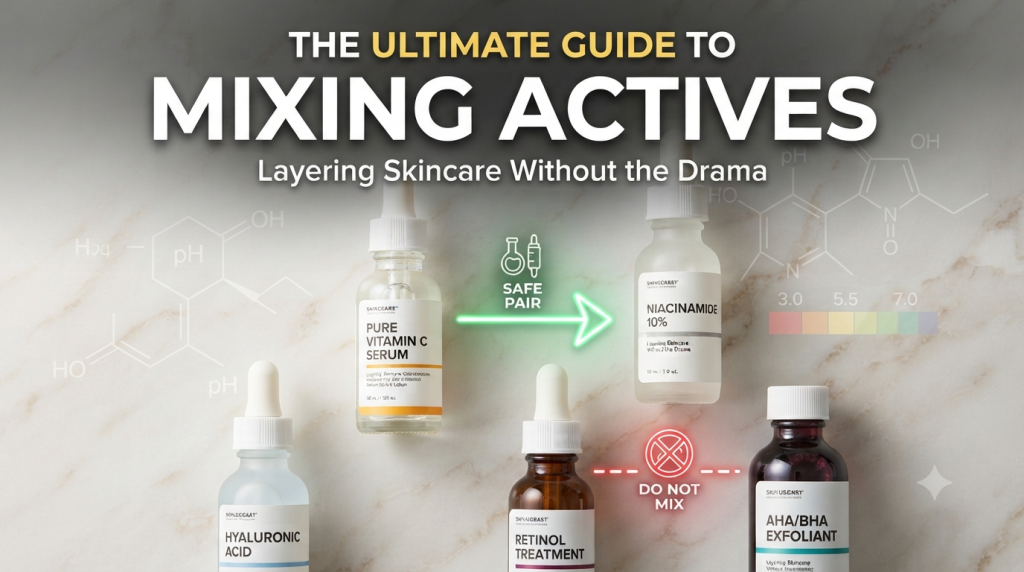
Learn how to safely layer these active ingredients without irritation. Follow this Mixing Niacinamide and Vitamin C: A Simple Guide to protect your skin barrier and get the best results from your routine.
Mixing Niacinamide and Vitamin C: A Simple Guide
When mixed correctly, these ingredients can dramatically transform texture, clear breakouts, and fade hyperpigmentation. Mixed incorrectly, they can cause burning, flaking, or a compromised skin barrier. Here is the science-backed blueprint on how to layer actives like a dermatologist, clear up myths, and structure your routine.
The Core Science: pH Levels and Solubility
Before looking at specific ingredients, it helps to understand the two main rules that govern how skin absorbs skincare products: pH levels and solubility. This is where understanding a Mixing Niacinamide and Vitamin C: A Simple Guide becomes crucial.
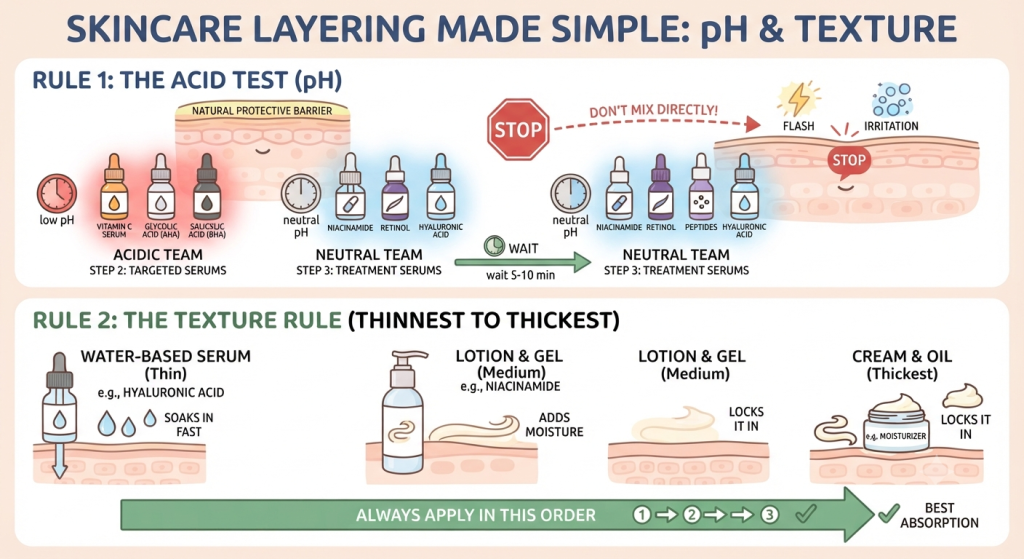
Skin naturally sits at a slightly acidic pH of around 4.7 to 5.75. Skincare actives operate best within specific pH windows:
-
Highly Acidic Actives (pH 2.5 – 3.5): Pure Vitamin C (L-Ascorbic Acid), Glycolic Acid (AHA), and Salicylic Acid (BHA).
-
Neutral/Mild Actives (pH 5.0 – 7.0): Niacinamide, Retinol, Peptides, and Hyaluronic Acid.
Why this matters: If you layer a highly acidic product directly over a neutral one, you alter the pH environment. This can either deactivate the ingredients or trigger intense skin irritation. By following a proper Mixing Niacinamide and Vitamin C: A Simple Guide, you can avoid these formulation conflicts. Ultimately, mastering a Mixing Niacinamide and Vitamin C: A Simple Guide ensures your products work effectively together without damaging your skin.
The Thickness Rule (Thinnest to Thickest)
To ensure everything penetrates the skin properly, products should be applied based on weight and viscosity. Applying a watery serum over a heavy face oil blocks the serum from ever reaching your skin cells.
Can You Use Niacinamide with Vitamin C?
Yes, absolutely.
For years, old beauty advice claimed that mixing Niacinamide (Vitamin B3) and Vitamin C (L-Ascorbic Acid) neutralized both ingredients and caused extreme skin flushing. This myth stems from 1960s laboratory studies that used unstable forms of these ingredients at exceptionally high temperatures.
In modern skincare formulations, these two ingredients are highly compatible and offer a powerful combination for brightening skin tone. Vitamin C targets melanin production to fade dark spots, while Niacinamide prevents that pigment from transferring into skin cells.
How to use them together safely:
-
- The Separate Approach: Apply Vitamin C in the morning (to boost your sunscreen’s antioxidant defenses) and Niacinamide at night.
-
- The Layering Approach: Apply your Vitamin C first, wait 5 minutes for it to absorb and for your skin’s pH to settle, then apply your Niacinamide.
The Compatibility Matrix: What Blends, What Clashes
Understanding which ingredients work well together—and which should be kept separate—is key to avoiding redness and irritation.
Perfect Pairs (Green Light)
-
- Retinol + Hyaluronic Acid / Ceramides: Retinol accelerates skin cell turnover, which frequently causes initial dryness. Layering it with hydrating molecules like Hyaluronic Acid or barrier-repairing Ceramides mitigates irritation.
-
- Vitamin C + Vitamin E + Ferulic Acid: This is a classic antioxidant trio. Ferulic acid stabilizes pure Vitamin C, doubling its effectiveness at neutralizing free radical damage from UV rays and pollution.
-
- Niacinamide + Salicylic Acid (BHA): BHA dissolves oil inside the pores, while Niacinamide regulates sebum production and visibly minimizes pore size.
Risky Combinations (Red Light)
-
- Retinol + AHAs/BHAs (Glycolic, Lactic, Salicylic Acid): Both chemical exfoliants and retinoids encourage cell turnover. Using them in the same application window can easily over-exfoliate the skin, leading to peeling, redness, and a damaged skin barrier.
-
- Retinol + Pure Vitamin C: Vitamin C requires an acidic environment, while Retinol functions best at a neutral pH. Using them together diminishes the efficacy of both.
-
- Benzoyl Peroxide + Retinol: Benzoyl peroxide can oxidize certain forms of retinol, rendering them ineffective.
Step-by-Step: The Perfect Layering Order
When structuring your daily routine, stick to the classic master sequence to maximize absorption and protect your skin barrier.
1.Cleanse:AM & PM.
Remove oil, sweat, and impurities. In the evening, consider a double-cleanse starting with an oil-based balm to thoroughly break down makeup and water-resistant sunscreens.
2.Tone / Hydrate:AM & PM.
Apply watery toners, essences, or hydrating humectants like Hyaluronic Acid to slightly damp skin. This primes the skin surface to absorb subsequent products.
3.Apply Target Actives:Varies by time of day.
Apply low-pH or highly targeted treatment serums. Use Vitamin C in the morning; apply Retinol or exfoliating acids (AHAs/BHAs) in the evening.
4.Moisturize:AM & PM.
Apply an emollient or cream containing ceramides, fatty acids, or glycerin. This seals in your active ingredients and reinforces the moisture barrier.
5.Protect or Seal:AM: Sunscreen | PM: Face Oil.
In the morning, finish with broad-spectrum SPF 30 or higher (this step is non-negotiable when using acids or retinoids). In the evening, optional face oils go last to lock in hydration.
Cheat Sheet: Weekly Routine Schedule
To use all your favorite ingredients without overwhelming your skin, rotate them across different days of the week rather than stacking them all in one evening.
| Day | Morning Routine (AM) | Evening Routine (PM) |
| Monday | Vitamin C + Sunscreen | Hydration & Barrier Repair (No Actives) |
| Tuesday | Vitamin C + Sunscreen | Exfoliation Night (AHA or BHA) |
| Wednesday | Vitamin C + Sunscreen | Retinol Night |
| Thursday | Vitamin C + Sunscreen | Hydration & Barrier Repair |
| Friday | Vitamin C + Sunscreen | Exfoliation Night (AHA or BHA) |
| Saturday | Vitamin C + Sunscreen | Retinol Night |
| Sunday | Vitamin C + Sunscreen | Hydration & Recovery Night |
Pro Tip: Introduce only one new active ingredient at a time. Patch-test it on your inner arm or jawline for 48 hours to ensure your skin tolerates the formula before applying it to your entire face.